Independent since 2019 · No paid placement, ever Prices re-checked weekly
Guides 4 min read

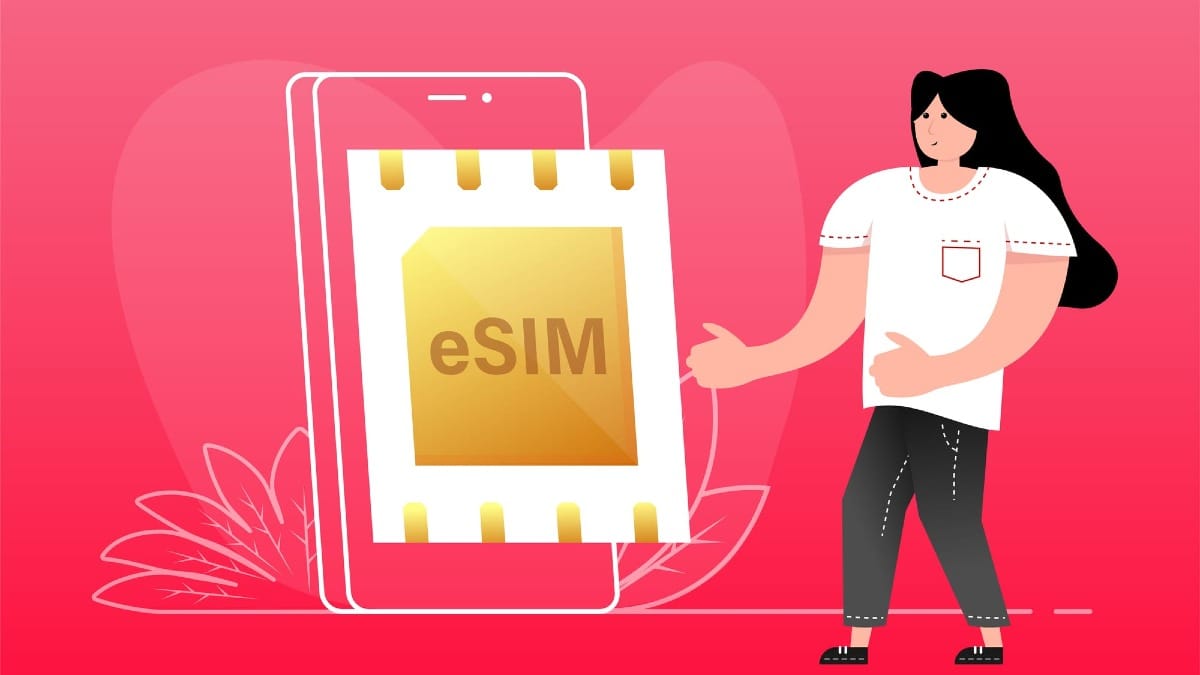
iPhone Duo Is eSIM-Only, With Two Lines Active at Once

No SIM tray, two active eSIMs, and storage for eight or more profiles. For anyone shopping plans, that is the most useful thing about the first foldable iPhone — it lets you run a trial and your real line side by side.

Jean Gilles
Founder & Lead Analyst, ShopCellPlans
Published September 10, 2026
Updated September 10, 2026
iPhone Duo ships without a SIM tray anywhere in the world.

Most of the iPhone Duo coverage is about the fold. The part that matters if you are shopping for a plan is smaller and buried in the spec sheet: there is no SIM tray, two eSIM lines can be active at the same time, and the phone stores eight or more profiles. That combination changes how cheaply you can test a carrier before committing to one.

Key takeaways
No SIM tray anywhere in the world — if your carrier does not do eSIM, it is not an option on this phone.
Two eSIM lines run active at once, with eight or more profiles stored.
That makes running a carrier free trial alongside your real number straightforward.
iPhone Handoff, for sharing one number across two iPhones, is T-Mobile-only in the US at launch.
The C2 modem adds US mmWave support, so the phone is not the limiting factor on any major network.

What Apple actually specified

  • eSIM-only worldwide. Apple states the design saves internal space for battery capacity, and that iPhone Duo is not compatible with physical SIM cards.
  • Dual eSIM: two active eSIMs at once, with storage for eight or more profiles.
  • eSIM is supported by more than 500 carriers globally, including AT&T, T-Mobile and Verizon.
  • The C2 modem now supports mmWave in the US, alongside sub-6 5G and Gigabit LTE with 4x4 MIMO.
Two active lines is the useful number
Two eSIMs active simultaneously means your existing carrier and a second carrier can both be live on the same phone. That is exactly what a free trial needs: keep your number receiving calls while a trial line carries your data, then compare them in the same places on the same day.
iPhone Duo folded in a sand case, outer display active alongside the rear cameras
Closed, the outer display runs one line’s worth of everyday use.

Why this matters for testing a carrier

Coverage maps are marketing. The only reliable test is your own address, your commute and your office, and until recently that meant either swapping SIM cards or giving up your number for the duration. With two active eSIM lines you run the test in parallel. Several carriers issue trial lines on a temporary number specifically so your real line stays untouched, which fits this hardware exactly.

Every carrier free trial, compared

Fifteen carriers sorted longest to shortest, with the fine print on each.

See every free trial
iPhone Duo open showing a widget list on the left screen and an email on the right
Both eSIM lines stay live whether the phone is open or closed.

The catch: your old carrier has to cooperate

eSIM-only removes the fallback. If a carrier or a regional MVNO you want still provisions physical SIMs only, that carrier is not an option on this phone at all — there is no tray to put a card into. Check that your intended carrier supports eSIM activation before you pre-order, not after.

Moving an existing line onto the phone is also a transfer rather than a card swap. Most major carriers handle eSIM transfer in-app in a few minutes, but a locked or unpaid device on the old account can stall it, and a few smaller carriers still route eSIM transfers through support.

iPhone Handoff is T-Mobile-only at launch

iOS 27 adds iPhone Handoff, which lets you move the same phone number back and forth between two iPhone models. Apple says it requires a supported carrier, and at launch that means T-Mobile in the US and Telekom in Germany. If you were planning to keep an older iPhone as a second device on one number, that feature is currently a T-Mobile feature.

Satellite features need a carrier plan for some functions

Satellite features are included free for two years with activation of any iPhone 14 or later. Apple notes that some satellite features require a carrier plan, and that SMS messaging via satellite works on supported carriers. Worth confirming with a prepaid or MVNO carrier rather than assuming.

Compare plans on all-in pricing

Every plan we track, ranked on what you actually pay with taxes included.

Compare phone plans
#iPhone #eSIM #Dual SIM #Free trials #Switching
Jean Gilles
About the author

Jean Gilles has researched personal finance, consumer technology, and wireless pricing for over a decade. He founded ShopCellPlans in 2019 and writes every review on the site.

Frequently asked questions

Does iPhone Duo have a SIM tray? +
No. Apple states iPhone Duo uses an eSIM-only design worldwide and is not compatible with physical SIM cards.
How many lines can be active at once? +
Two. iPhone Duo supports dual eSIM with two active eSIMs and stores eight or more eSIM profiles.
Can I run a free trial and my current plan at the same time? +
Yes, if both carriers support eSIM. One active eSIM carries your existing number and the second carries the trial line, so you can compare them without an interruption.
Will my MVNO work with it? +
Only if it provisions eSIM. More than 500 carriers support eSIM including AT&T, T-Mobile and Verizon, but some smaller carriers still ship physical SIMs only — check before ordering.
Can I move my number between two iPhones? +
iOS 27's iPhone Handoff does this, but Apple says it requires a supported carrier. At launch that is T-Mobile in the US.
Price-change alerts
Get told when your plan’s price changes

One email when a carrier raises rates, drops a plan, or launches a deal worth switching for. No spam, unsubscribe anytime.

Keep reading

All guides
Independent since 2019 · No paid placement, ever Prices re-checked weekly
{{ category }} {{ readLabel }}

{{ title }}

{{ dek }}

{{ avatarEl46 }} {{ authorInitials }}
{{ authorRole }}
Published {{ published }}
Updated {{ updated }}
{{ heroCaption }}
{{ heroCaption }}
{{ category }} {{ readLabel }}

{{ title }}

{{ dek }}

{{ avatarEl46 }} {{ authorInitials }}
{{ authorName }}
{{ authorRole }}
Published {{ published }}
Updated {{ updated }}
{{ category }} {{ readLabel }}

{{ title }}

{{ dek }}

{{ avatarEl46 }} {{ authorInitials }}
{{ authorName }}
{{ authorRole }}
Published {{ published }}
Updated {{ updated }}
{{ category }} {{ readLabel }}

{{ title }}

{{ dek }}

{{ avatarEl46 }} {{ authorInitials }}
{{ authorName }}
{{ authorRole }}
Published {{ published }}
Updated {{ updated }}
{{ heroCaption }}
{{ category }} {{ readLabel }}

{{ title }}

{{ dek }}

{{ avatarEl46 }} {{ authorInitials }}
{{ authorName }}
{{ authorRole }}
Published {{ published }}
Updated {{ updated }}

{{ intro }}

Key takeaways
{{ t }}

{{ b.text }}

{{ b.text }}

{{ b.text }}

  • {{ li }}
  1. {{ li }}

{{ b.text }}

— {{ b.cite }}
{{ b.title }}
{{ b.text }}
{{ c }}
{{ cell }}
{{ b.caption }}
{{ b.imgEl }}
{{ b.caption }}
{{ b.title }}

{{ b.text }}

{{ b.label }} →
#{{ tag }}
{{ avatarEl64 }} {{ authorInitials }}
About the author

{{ authorBio }}

Frequently asked questions

{{ f.q }} +
{{ f.a }}
Price-change alerts
Get told when your plan’s price changes

One email when a carrier raises rates, drops a plan, or launches a deal worth switching for. No spam, unsubscribe anytime.

Sources
  1. {{ s.label }} {{ s.label }}

Keep reading

All guides